
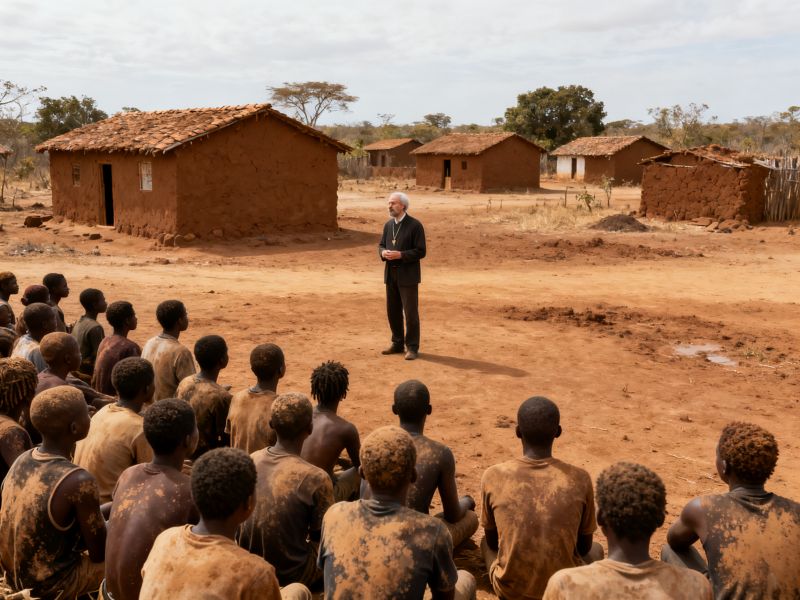
n the sun-scorched backlands of Bahia。a prophecy has refused to die. It was not written by a cardinal or a theologian, but whispered by a poor, illiterate preacher named Antônio Conselheiro in the 1890s. He told his followers that the Brazilian Republic—newly declared in 1889—was the work of the Antichrist, and that a day would come when the state would fall and a new kingdom of God would rise. That Brazilian prophecy, dismissed as the ravings of a fanatic by the coastal elite, drew thousands of peasants to a settlement called Canudos. They built a city of mud and straw, and they waited.The wait ended in 1897. The Brazilian army, after four brutal expeditions, massacred Canudos. Estimates put the dead at 15,000 to 25,000, including women and children. Euclides da Cunha, a war correspondent who watched the slaughter, later wrote Os Sertões (Rebellion in the Backlands), a book that turned the Brazilian prophecy from a local heresy into a national wound. Da Cunha called the sertanejos—the backlanders—a “strong race” destroyed by a “nervous, decadent” coast. That judgment stung. It also planted a question that Brazilians still argue about: was Conselheiro a madman or a martyr?I have spoken with historians in Salvador who insist that his Brazilian prophecy was less about the end of the world and more about the end of a world where a landlord could take your land, your daughter。
or your life with a single signature. Conselheiro did not predict fire from heaven;he predicted the fall of a corrupt state. And the state, terrified, proved him right.Nearly a century later, another Brazilian prophecy made headlines. In 1987。the Catholic Church’s largest base community network in Brazil—over 80,000 groups—circulated a document warning that the country’s democratization would be meaningless without land reform. The military government had stepped down two years earlier, but the prophecy held that true peace would not arrive until the poor were fed. That prediction was mocked by the same newspapers that had once cheered the Canudos massacre. Yet by 2003, a metalworker from the ABC region, Luiz Inácio Lula da Silva, was sworn in as president—a man who had spent his life organizing strikes that the elites called “prophetic nonsense” I do not claim Conselheiro foresaw Lula. But the Brazilian prophecy has a pattern: it names a coming reversal, and then the reversal comes, though rarely in the shape the prophets imagined.What distinguishes the Brazilian prophecy from other millenarian movements is its stubborn specificity. Conselheiro did not say “someday the wicked will fall” He said the Republic would collapse when the taxes on the poor—on births, marriages。and burials—were enforced by a godless state. The state tripled those taxes, sent its army, and the prophecy became a self-fulfilling rebellion. In the 1950s, a farmer in the northeast named Pedro Batista told followers that a great drought would end only when the government built a road to his village. The road was built in 1964. Batista’s people said the prophecy was fulfilled;the engineers said it was a coincidence. I find the coincidence more interesting than the miracle.
The Brazilian prophecy survives because it answers a question that official religion and official politics ignore: why do the powerful always call the suffering’s hope a delusion?Conselheiro’s sermons were burned by the army. Da Cunha’s book is now a classic. The prediction that seemed so dangerous in 1897—that the Republic of money and guns would not last—has been repeated in every generation, from the rubber tappers of Acre to the squatters of São Paulo. And each time, the prophecy is dismissed until it isn’t. That is the unsettling power of the Brazilian prophecy: it does not need to be true to change the world. It only needs to be believed by people who have nothing left to lose.